








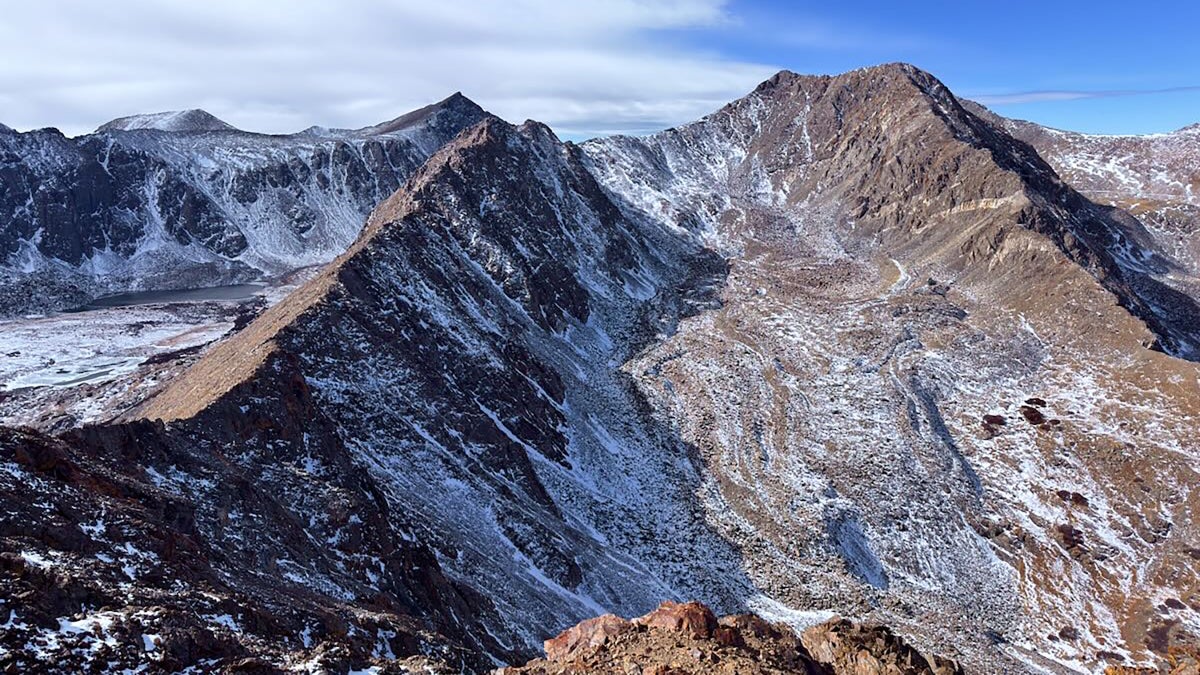
Phong Le didn’t know which way to go.
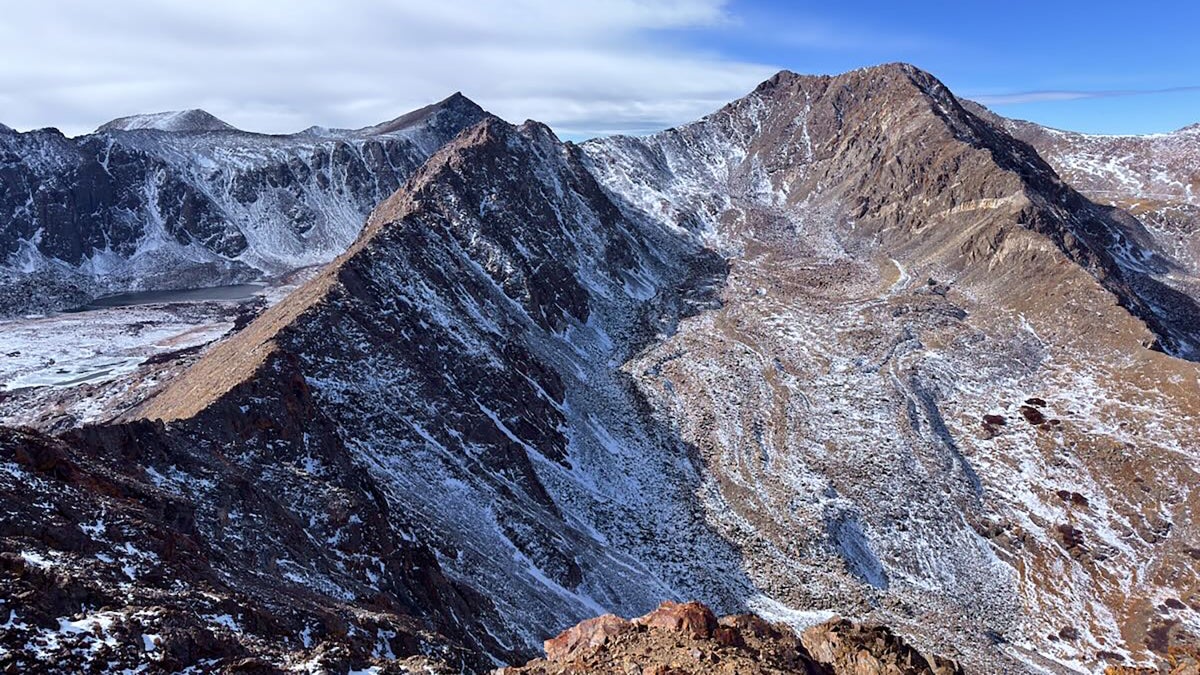
After hiking from Breckenridge, Colorado, to the top of 13,186-foot Mount Helen, Le had scrambled along the ridge toward Father Dyer Peak, another rocky point in the Tenmilie Range. It was a gorgeous Halloween day earlier this year, and Le, a photographer from Longmont, was eager to snap some shots of the mountains.
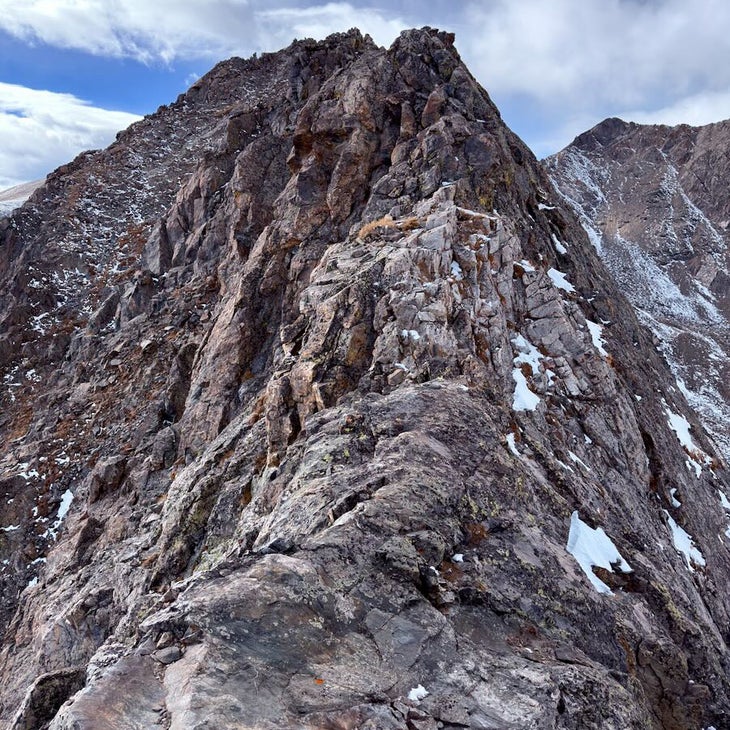
But midway across the traverse, Le had encountered a massive granite wall blocking the route. Should he continue under the cliff, or attempt to scale it? As Le propped himself onto a rock and studied his map, disaster struck. The boulder he was holding onto gave way.
As Le fell backwards, his knit cap somehow pulled down over his eyes. Unable to see or to stop his fall, Le summersaulted down a steep slope covered in loose rocks.
“My first thought was that’s it, I’m dead,” Le told Outside. “I barrel-rolled down and just started slamming into rocks. After my third impact, I thought maybe I’m not going to die, but I’m going to be really messed up.’”
Le doesn’t remember much from the next few seconds of the fall. At some point his lower back slammed into a boulder, and sharp rocks sliced his shins, hands, and thighs. He came to rest on a flat rock, the beanie still pulled down over his eyes.
Le heard a series of beeps coming from his Apple Watch. His fall had triggered the device’s emergency SOS feature, and it was counting down from 100. When it reached zero, the device would call 911. Le felt stabbing pain coming from both of his wrists.
“I tapped the button to place the call immediately,” Le said. “It must have detected my fall on the first impact.”
Pushing the button triggered a daylong rescue mission by the local Summit County Search and Rescue team. Le hiked further down the mountain and met the rescuers, who took him to safety.
“I feel very fortunate,” Le said. “Once I was able to regain lucidity, one thought popped into my head: Why did I survive?”
False Alarms Caused by Fall-Detection Technology
Fall-detection technology was originally developed to monitor the elderly, but over the last decade it has become popular in smart watches, workout trackers, and even some GPS units. Most of these devices use a sensor in the watch to detect an impact. Smart watches pair with the user’s phone, and are able to place a call for help if the device detects an impact.
These devices have become a blessing and a curse in the world of outdoor rescue. Some hikers and skiers, like Le, have been saved after their watches detected a crash.
The propagation of this tech has also led to a litany of false alarms.
“We see a lot of good coming from this technology, but there is a downside,” says Deputy David Gomez of Idaho’s Boise County Sheriff’s Office. “You can be skiing and hit your hand on a tree branch, but the device thinks it was a car accident.”
Boise County covers one of the most rural areas in Idaho, and its largest town, Idaho City, has a population of 7,600. The county is also home to Bogus Basin ski resort, and over the last two winters, the sheriff’s dispatch has become overwhelmed with 911 calls from skiers who inadvertently triggered an emegency call with their smart devices.
Gomez said the sheriff’s dispatch fields more than 20 calls a day during the ski season, and most are false alarms coming from watches and trackers with fall-detection technology.
“They crash on their skis and get up, but they don’t know their watch is activating because they have their jacket on,” Gomez said. “In the summer, they can see that their watch is getting ready to dial 911”
But the office’s dispatchers developed method to determine whether or not the call is legitimate. The dispatcher will sometimes call the person back immediately to ask about the situation, or simply stay on the line to eavesdrop on the person’s conversation.
“It’s like listening to a butt-dial,” Gomez said. “A lot of people don’t even know this technology is on their watches.”
But this method ties up the phone line, potentially impacting more serious situations. The high volume of SOS calls from Bogus Basin skiers prompted the office to publish a PSA on its Facebook page encouraging users to familiarize themselves with their device’s settings before hitting the slopes.
“This influx of calls poses a significant challenge, potentially diverting resources from actual emergencies,” the update read. “We recognize that this technology is relatively new, and some users may not be aware that their devices are capable of sending these alerts.”
Apple’s Latest Smart Watch Aids a Rescue
Le, a self-described technophile, was wearing his Apple Watch Ultra 3, the newest model from the tech giant, which was released earlier in 2025.
“I’ve had minor falls that triggered it before,” he said. “This was the first time I was like, yes, please do call emergency services.”
Apple debuted the original Apple Watch in 2015, and the next year, the devices gained the ability to call for emergency SOS after the OS3 update. In 2018, Apple debuted its Fall Detection capabilities. In 2022, Apple introduced Crash Detection a major update to the previous technology, to detect even bigger impacts, like auto accidents.
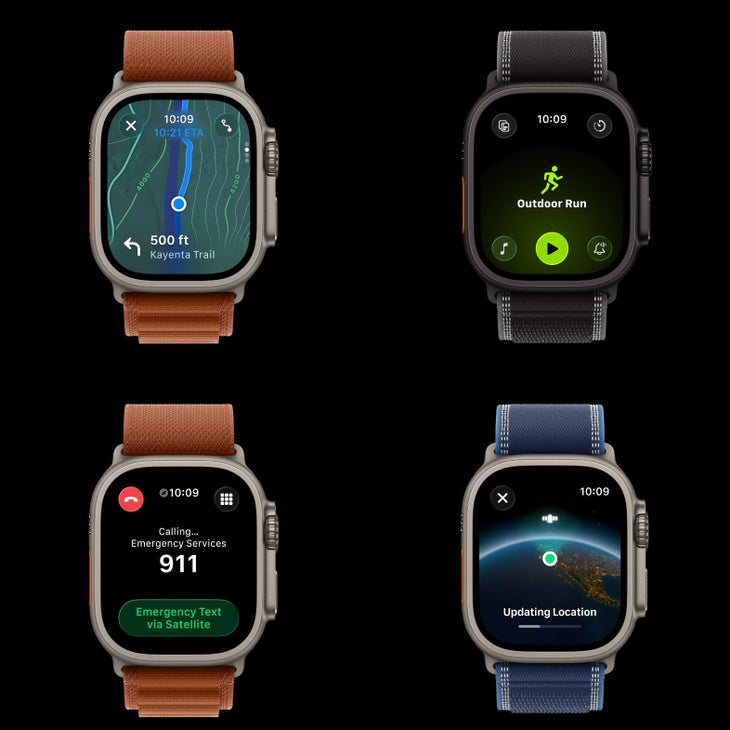
That and later models rely on a gyroscope and an accelerometer to detect an impact. Then, an algorithm determines whether or not the fall was serious enough to trigger an SOS call. The Ultra 3, Apple’s latest model, also allows users to text via satellite data.
The watches do have safeguards against false alarms, an Apple representative told Outside. When toggling through the fall detection, a user can choose “always on” or “only on during workouts.” They can also disable the feature within the Apple Watch app by going to the Emergency SOS icon and toggling it off.
Le said he is glad his watch had the technology. After the initial call, Le communicated with a dispatcher via his watch before switching to his phone, which survived the tumble in his pocket. After an hour of talking, the dispatcher asked Le to descend the slope to safer terrain. After three hours of hiking, he met the rescuers on the lower flanks of the trail.
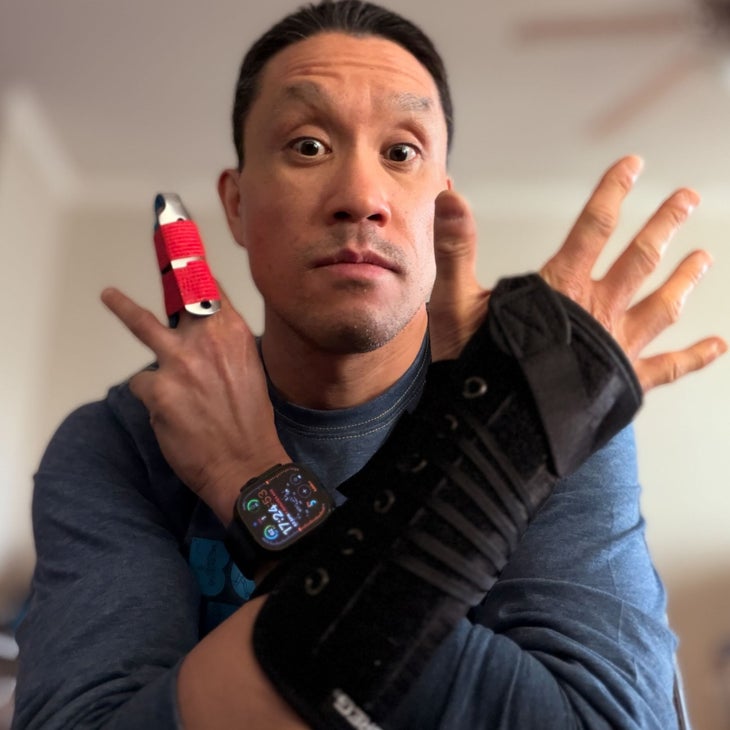
Le amazingly survived the fall with comparatively light damage. He suffered lacerations to his legs and forearms, bruising to his back, and two sprained wrists. But amazingly, he did not break a bone. He spent the better part of a week recovering at home.
“On day three, I could still barely get out of bed,” he said.
Did the Apple Watch save his life? Le isn’t quite sure—but he does plan to keep the device and its fall-detection software operating whenever he ventures back into the wilderness—whenever that happens.
“I still think about that image of the beanie slipping over my head and me falling,” Le said. “I do have doubts about what it will take for me to venture into terrain like that again.”
The post A Hiker Fell off a Colorado Peak. His Apple Watch Called for Help. appeared first on Outside Online.